

Rooftop AC Versus Split System for Vehicles

A rooftop AC versus split system decision affects more than cab or cabin comfort. It determines where weight sits on the vehicle, how the equipment is powered, what body modifications are required, and how quickly a technician can diagnose a failure. For a fleet truck, shuttle bus, RV, service van, or specialty build, the right layout is the one that meets the cooling load without creating avoidable installation or maintenance problems.
Rooftop AC Versus Split System: The Basic Difference
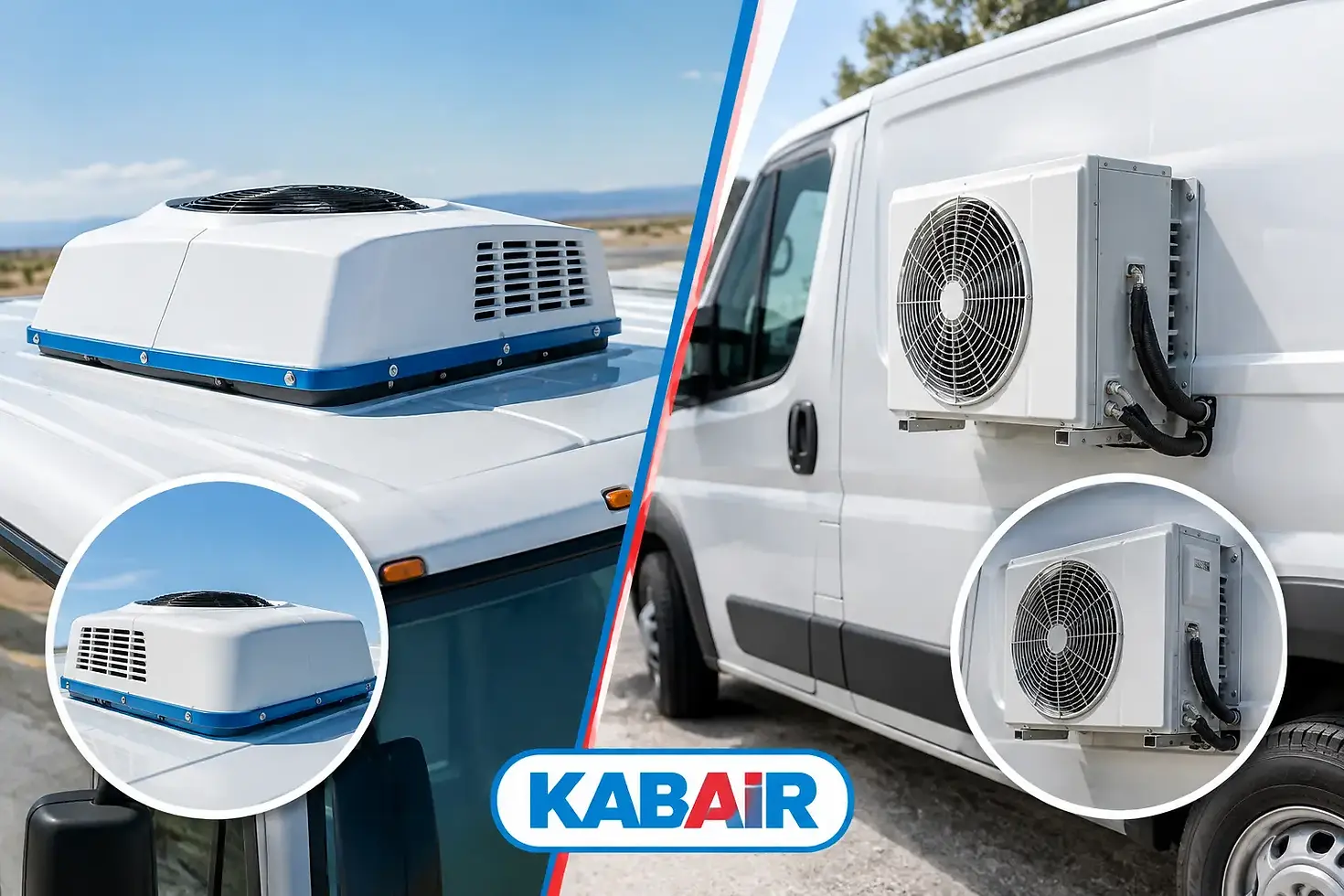
A rooftop air conditioner is generally a packaged unit mounted through or on top of the roof. Major components are housed together in a single assembly, with conditioned air delivered directly below the unit or distributed through ducting where the design allows. This layout is common where roof space is available and a compact, self-contained installation is preferred.
A split system separates the indoor evaporator section from the outdoor condenser and compressor section. The components are connected by refrigerant lines, electrical wiring, and condensate drainage provisions as required by the equipment design. In a vehicle application, the evaporator may be mounted in the cab, passenger area, sleeper, or equipment compartment, while the condenser section is placed on the roof, rear wall, underbody, or another protected exterior location.
The distinction matters because a split system gives the installer more freedom to place components around the vehicle's structure. A rooftop unit reduces the number of separate assemblies and refrigerant-line routing points. Neither arrangement is automatically better. The vehicle, duty cycle, electrical source, roof construction, and service plan should drive the selection.
When a Rooftop Unit Makes Practical Sense
Rooftop AC is often the straightforward option for RVs, buses, mobile offices, command units, and vans with a strong, usable roof structure. The equipment is concentrated in one location, which can simplify system layout and preserve interior floor and wall space.
For an upfitter, rooftop mounting can also shorten the path between the unit and its supply-air location. There may be fewer external components to package around doors, ladders, liftgates, storage boxes, or chassis equipment. On vehicles that spend time parked, a rooftop unit can be a practical choice when the available shore power, generator, inverter, or battery system has been properly matched to the unit's electrical requirements.
That simplicity has limits. A rooftop assembly adds weight high on the vehicle, which should be considered on tall vans, high-roof specialty vehicles, buses, and RVs. Roof reinforcement, opening dimensions, sealing surfaces, drainage, clearance, and interference with roof vents, solar equipment, antennas, emergency exits, or rack systems all need review before installation.
Service access is another consideration. A packaged unit may be easier to identify as one assembly, but reaching it can require safe roof access. For fleet equipment that returns to a shop regularly, this may be manageable. For remote service vehicles, access conditions can influence labor time and repair planning.
Where Split Systems Have an Advantage
A split system is often the better packaging solution when the roof cannot support a large unit, when exterior height must be controlled, or when cooling needs to be delivered precisely to a specific zone. This can apply to sleeper cabs, specialty bodies, mobile clinics, utility vehicles, work vans, and passenger vehicles with divided interior spaces.
Separating the evaporator from the condenser can improve layout flexibility. The interior section can be positioned closer to occupants or heat-sensitive equipment, while the exterior section can be installed where airflow and service clearance can be maintained. It may also allow the installer to use roof area for other required equipment.
The trade-off is installation complexity. Refrigerant lines must be routed and secured correctly, protected from vibration and abrasion, and kept within the manufacturer's approved limits. Electrical connections, condensate routing, mounting brackets, hose pass-throughs, and leak testing all add work. These systems should be installed and serviced by qualified technicians using the proper procedures and equipment.
A split layout can also make future troubleshooting more involved because the system is distributed across the vehicle. A compressor issue, airflow issue, electrical fault, refrigerant leak, or control problem may require inspection at more than one location. Good component access and documented routing are valuable from the start.
Fitment Comes Before Cooling Capacity
Cooling capacity matters, but selecting equipment by capacity alone can lead to a poor installation. Before comparing models, confirm the vehicle application and available mounting envelope. Measure usable roof area, interior clearance, exterior service clearance, body-panel strength, and the path for ducts, drains, wiring, and refrigerant lines.
The actual heat load depends on vehicle size, insulation, window area, passenger count, equipment load, door-open frequency, ambient conditions, and how long the vehicle operates or remains parked. A delivery van with frequent door openings behaves very differently from an insulated RV cabin or a stationary mobile work unit. A bus carrying passengers also presents a different load profile than a sleeper compartment occupied by one driver.
Electrical capacity must be evaluated at the same time. Confirm the available power source, system voltage, wire sizing, circuit protection, charging capability, and operating strategy. Battery-powered or engine-off climate systems need a full energy assessment, not just a check of nominal voltage. For systems tied to vehicle electrical architecture, verify how operation affects starting reserve, alternator capacity, auxiliary batteries, and charging equipment.
Installation Details That Affect Reliability
The best system can still perform poorly if installation details are missed. Rooftop units rely on a properly prepared roof opening or mounting surface, correct fastening, approved sealing materials, and stable support. Water intrusion around a roof penetration can become a larger vehicle problem than the AC issue itself.
Split systems require disciplined line and cable routing. Refrigerant hoses and wiring should be supported, protected from heat and sharp edges, and kept clear of moving components. Exterior condensers need adequate airflow and should be located where road debris, wash-down exposure, and accidental impact are considered. Interior evaporators need a practical route for condensate management and access to filters or service panels when applicable.
For either configuration, do not assume a unit will replace another simply because the overall dimensions appear similar. Mounting patterns, return-air requirements, discharge orientation, electrical specifications, controls, duct interfaces, and vehicle structure can differ. Confirm the equipment model, available installation documentation, and application requirements before ordering a replacement.
Maintenance and Downtime Considerations
For fleet managers, serviceability is often the deciding factor between a rooftop AC versus split system. The preferred design is the one technicians can inspect, diagnose, and repair without excessive disassembly or vehicle downtime.
A rooftop unit puts most air-conditioning components in one service area, which can simplify routine inspection. However, roof access, weather exposure, and contamination around condenser airflow surfaces should be planned for. A split system distributes components but can make certain parts easier to reach at ground level when the condenser is installed on a rear wall or lower exterior location.
Regardless of layout, maintenance should include cleaning airflow surfaces as appropriate, checking fasteners and mounting integrity, inspecting wiring and connections, verifying drain paths, and watching for physical damage. Refrigerant performance concerns, electrical faults, and compressor issues should be assessed by qualified HVAC/R personnel. Early inspection can prevent a minor airflow or connection problem from becoming an out-of-service event.
How to Choose for Your Vehicle
Choose a rooftop unit when the roof structure, height envelope, and power arrangement support it, and when a self-contained installation offers the cleanest package. It is often a strong fit for applications with open roof real estate, straightforward interior air delivery, and planned roof-level service access.
Choose a split system when component placement flexibility is more valuable than installation simplicity. It can be the practical answer for constrained roofs, zone-specific cooling, interior layouts that need an evaporator in a particular location, or builds where other roof-mounted equipment takes priority.
For replacement projects, start with what is already installed, then determine why it needs replacement. A failed unit does not always mean the original architecture was wrong. Confirm the root cause, existing mounting conditions, available electrical capacity, and whether the current system's service limitations are creating repeat downtime.
KABAIR can help customers across North America narrow the options using the vehicle type, current equipment model, available space, electrical requirements, and installation objective. Providing photos, dimensions, OEM or equipment numbers, and a clear description of the application helps identify a workable path before parts are ordered.
The right air-conditioning layout should fit the vehicle as carefully as it fits the cooling requirement. Start with the mounting space, power source, and service access, then select equipment that can be installed and supported for the way the vehicle actually works.


Comments