

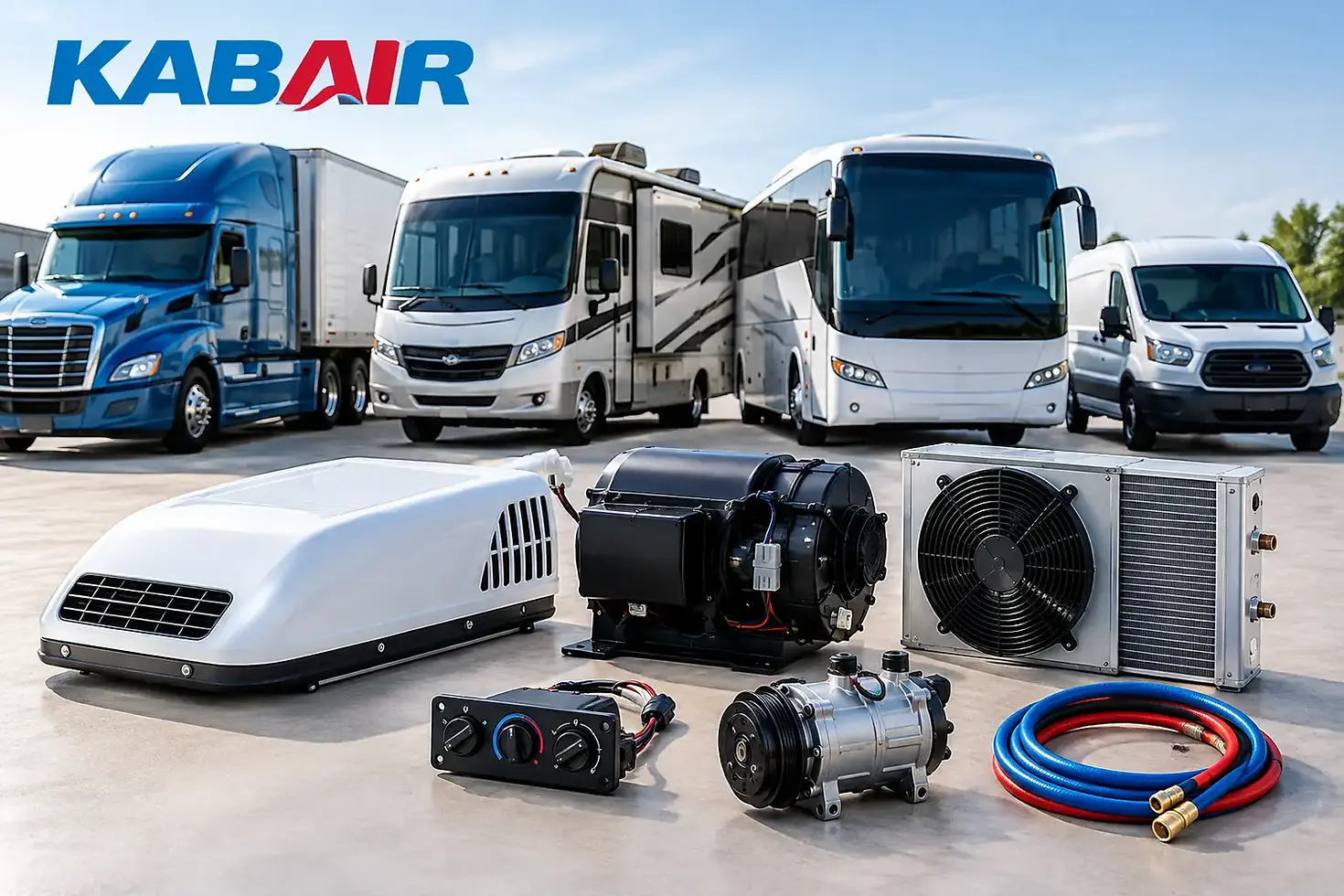
Aftermarket HVAC Compatibility That Fits

A replacement condenser can have the right overall dimensions and still be the wrong part. A rooftop unit can match the opening but exceed available electrical capacity. That is why aftermarket HVAC compatibility is more than finding a part that looks similar to the failed component. For trucks, trailers, vans, buses, RVs, and specialty vehicles, the replacement must work with the complete system, the vehicle installation, and the way the equipment is serviced in the field.
For fleet managers, technicians, and owner-operators, getting compatibility right prevents repeat repairs, delayed installs, refrigerant-system problems, and equipment downtime. The fastest order is not always the fastest repair if critical fitment details are missed.
What Aftermarket HVAC Compatibility Actually Means
Compatibility has three layers: physical fit, system function, and installation suitability. A part may bolt into place yet fail to communicate with the controller. A compressor may be designed for the same refrigerant but have the wrong displacement, mounting pattern, clutch configuration, pulley alignment, or electrical connector. A complete air-conditioning system may provide suitable capacity but require power or mounting provisions the vehicle does not have.
OEM part numbers are useful starting points, especially when replacing an original component. They are not the only information that matters. OEM equipment can change during a production run, and previous repairs may have altered the system. Cross-reference results should be verified against the actual equipment model, serial information where available, and the component installed on the vehicle.
The same principle applies to universal or application-flexible equipment. Universal does not mean installable on every vehicle. It usually means the component can be adapted when mounting, airflow, electrical protection, hose routing, controls, and capacity are correctly planned.
Verify the Application Before Choosing a Part
Start with the vehicle and the equipment, not just the component description. A truck cab air-conditioning system, a refrigerated trailer unit, a sleeper HVAC system, and a converted van may all use similar categories of parts, but their operating conditions and installation requirements differ significantly.
Record the vehicle year, make, model, engine or chassis details when relevant, and the type of application. Then identify the HVAC or refrigeration equipment manufacturer, model, serial number, and existing part number. Clear photos of the data plate, connector, hose ports, mounting points, and failed component can resolve questions that a vehicle description alone cannot.
For a complete system, define the operating need before selecting capacity. Consider the occupied space, insulation level, window area, ambient conditions, duty cycle, idling restrictions, available electrical supply, and whether the vehicle is moving or parked during operation. Cooling capacity, heating output, and airflow must suit the actual load. Installing a larger unit without considering power supply, ducting, condensate management, or controls can create a different set of problems.
Physical Fitment Is More Than Length and Width
Dimensions matter, but they are only the first check. Measure mounting-hole locations, depth behind the panel or roof opening, clearance for service covers, hose routing space, drain locations, and fan or blower clearance. On a vehicle, a few inches of interference with a frame member, cabinet, door swing, liftgate structure, or roof reinforcement can stop an installation.
Pay close attention to connection details. Refrigerant fittings may differ by thread, seat style, orientation, port size, or O-ring specification. Hose assemblies need the correct end types and clocking angles, not simply a close length. Electrical connectors can appear alike while using different pin assignments or current ratings.
A replacement evaporator or condenser also needs compatible airflow direction and adequate clearance. Restricting airflow through a coil or placing a fan assembly where it recirculates hot discharge air can reduce performance and increase component stress.
Match Electrical Requirements to the Vehicle
Electrical mismatches are among the most common causes of failed aftermarket HVAC installations. Confirm the system voltage, whether it operates on DC or AC power, expected running current, startup demand where applicable, required circuit protection, wire size, grounding method, and controller requirements. Do not assume a 12V vehicle can support every 12V accessory or that an available inverter can operate a specified AC load.
For battery-powered parking air conditioners, auxiliary heating equipment, rooftop systems, and electric refrigeration components, the complete energy path must be reviewed. That includes alternator capacity, battery bank, battery management system, charging source, fuse or breaker protection, cable routing, and intended runtime. A unit may be technically compatible with the vehicle voltage but unsuitable for the available energy storage or charging capability.
Control compatibility matters as well. Some systems use dedicated thermostats, sensors, relays, pressure switches, control modules, or proprietary communication methods. Reusing an existing controller with a different unit should only be done when the manufacturer documentation confirms it. Mixing controls and components based on wire colors or connector shape is not a reliable method.
Refrigerant-System Compatibility Requires Exact Checks
Air-conditioning and transport-refrigeration repairs demand more than a refrigerant match. Verify the specified refrigerant, lubricant type, compressor requirements, component pressure ratings, expansion device arrangement, hose and seal compatibility, and service-port configuration. These details are determined by the equipment design, not by convenience or parts availability.
A compressor replacement deserves particular attention. In addition to refrigerant and oil requirements, confirm mounting geometry, belt or pulley arrangement if applicable, clutch voltage, electrical connector, displacement, head configuration, suction and discharge ports, and whether the system needs a specific relief valve or control valve. A physically similar compressor can produce poor performance or cause system damage if these specifications do not align.
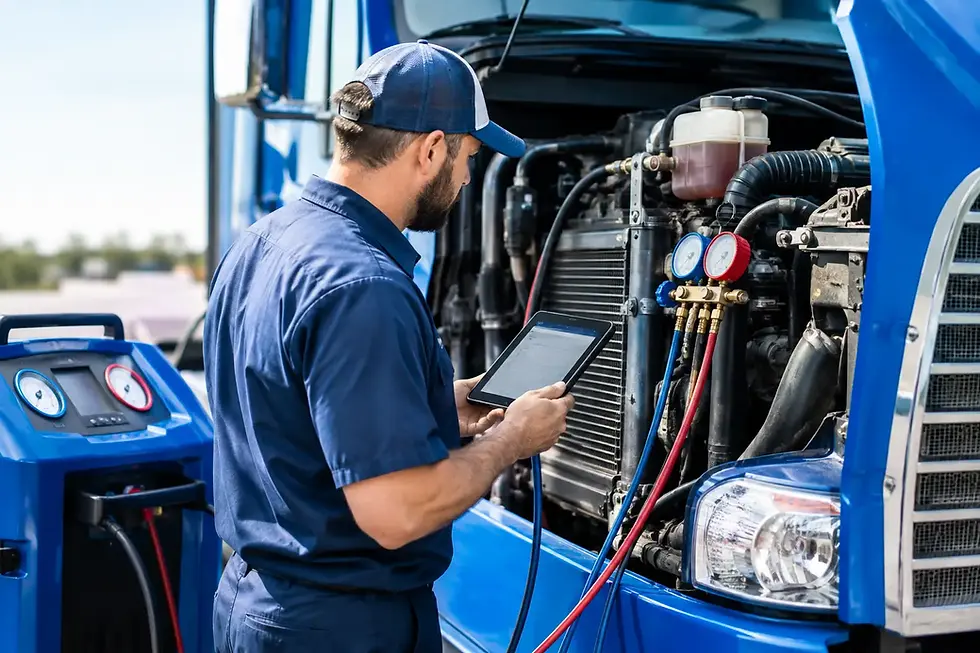
If a system has experienced compressor failure, replacing only the compressor may not correct the root cause. Contamination, restricted flow, moisture, condenser damage, electrical faults, or a failed metering device may need to be addressed. Refrigerant recovery, evacuation, charging, leak testing, and repair procedures should be performed by qualified HVAC/R technicians using the correct equipment and applicable regulations.
Consider Serviceability Before Installation
A compatible installation should remain serviceable after the vehicle returns to work. Access to filters, blower motors, electrical connections, service ports, drains, belts, and mounting hardware affects maintenance time and future repair cost. A tightly packaged installation may save space initially but create substantial downtime during routine service.
This is especially relevant for mobile work units, van upfits, buses, and RVs where cabinetry, shelving, insulation, or equipment racks can block access. Plan service clearances before final mounting. Confirm that panels can be removed, condensate can drain correctly, and diagnostic work can be completed without dismantling unrelated vehicle equipment.
For fleets, standardizing on serviceable component families can simplify spare-parts planning and technician training. Standardization should not override application requirements, but it can reduce the number of hoses, motors, filters, electrical components, and service tools needed across similar assets.
A Practical Compatibility Review Before Ordering
Before placing an order, compare the proposed replacement against the existing equipment and the installation plan. The key items are vehicle or equipment model, original part number, physical dimensions, mounting pattern, electrical requirements, refrigerant and oil specifications, connection types, capacity requirements, controls, and service access.
When any one of these details is unknown, pause before treating the part as a direct replacement. A clear photo set and equipment data can often confirm the answer faster than ordering a close match and discovering a problem during installation. For hard-to-identify components, a specialized supplier can help cross-reference available information and identify what still needs verification.
KABAIR supports customers across Canada and the United States with mobile HVAC/R parts and equipment sourcing for commercial vehicles and specialty applications. Providing the equipment model, OEM or aftermarket numbers, installation photos, and technical requirements helps narrow the options efficiently and reduces the risk of an avoidable return or delayed repair.
When an Aftermarket Option Makes Sense
Aftermarket equipment can be a practical choice when it meets verified application requirements and offers a workable path for installation, maintenance, and future parts support. It can also help when an OEM component is discontinued, difficult to source, or no longer the most suitable solution for an updated vehicle configuration.
The decision depends on the application. A direct-fit replacement may be the right answer for a time-sensitive fleet repair. A configurable system may be more appropriate for an upfit, conversion, or specialty vehicle where the original arrangement no longer fits the operating need. In either case, compatibility should be documented before the installation begins.
Treat fitment as a technical decision, not a visual comparison. The right aftermarket HVAC component is the one that fits the vehicle, supports the system design, can be installed safely, and remains practical to service when the vehicle is back on the road.


Comments