

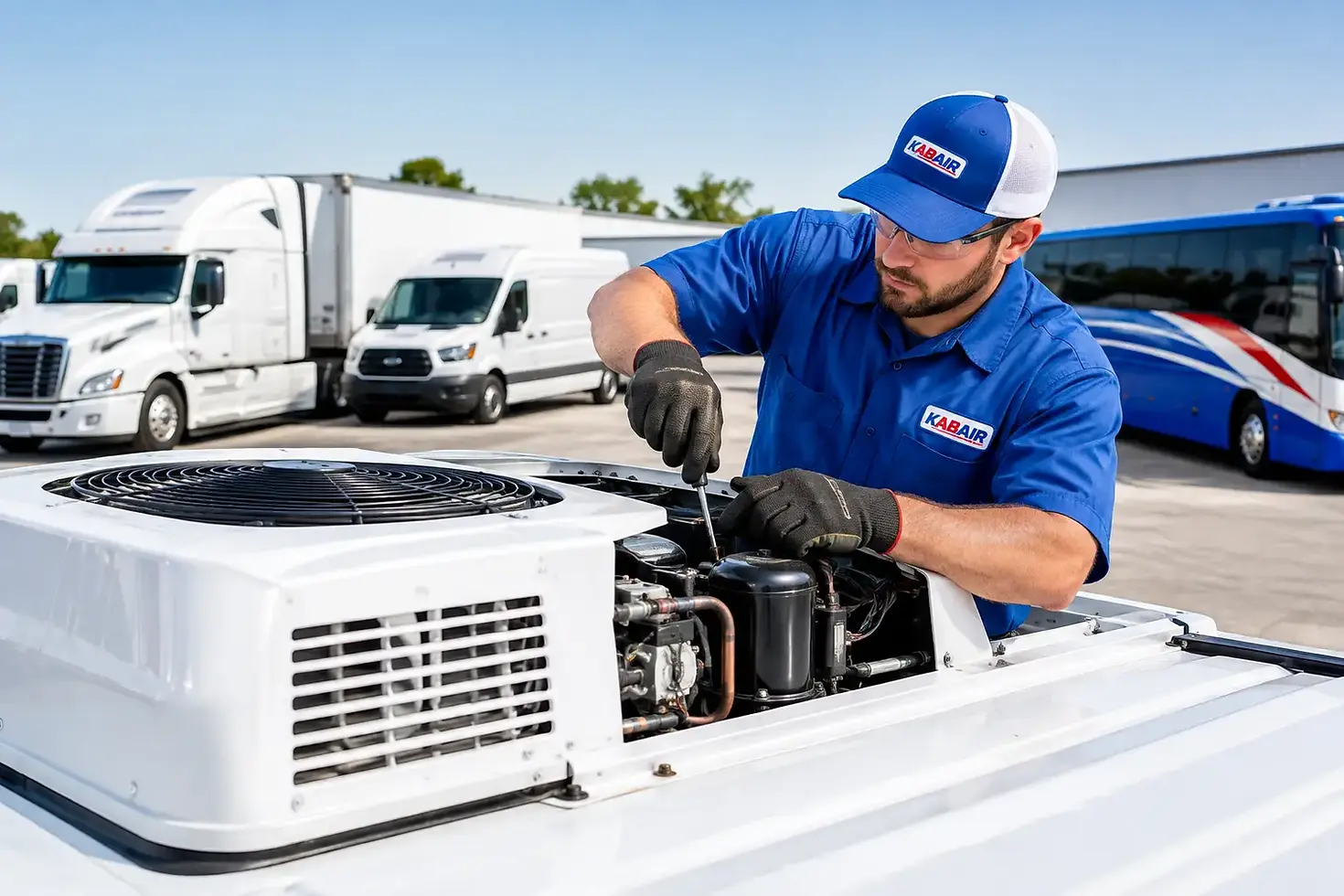
Fleet HVAC Maintenance That Prevents Downtime

A cab air conditioner that cools poorly in July or a heater that cannot hold temperature in January is more than a driver complaint. It can affect operator comfort, visibility, productivity, passenger experience, and the ability to keep equipment on the road. Effective fleet HVAC maintenance gives managers and technicians a planned way to find small faults before they become missed routes, emergency repairs, or difficult-to-source component failures.
For fleets operating trucks, vans, buses, service bodies, RVs, and specialty vehicles, the right maintenance plan depends on vehicle duty cycle, climate, idle time, operating hours, and system design. A city delivery van with frequent door openings faces different demands than a long-haul tractor, shuttle bus, or utility truck working in dusty conditions. The goal is not to replace parts on a fixed calendar without reason. It is to inspect condition, confirm performance, and address wear while the repair can still be scheduled.
Why Fleet HVAC Maintenance Needs a Planned Schedule
Mobile HVAC systems work in a harsher environment than many stationary systems. They face engine vibration, road spray, heat cycling, debris, corrosion, and electrical load changes. Hoses and fittings can chafe. Condenser fins can become blocked. Blower motors, relays, pressure switches, belts, and connectors all have service lives affected by the work environment.
A reactive approach usually costs more because the vehicle is already unavailable when the problem is discovered. The repair may also involve secondary damage. A restricted condenser, for example, can force the system to operate under higher pressure and heat. A weak blower can be mistaken for a refrigeration fault because the evaporator is not moving enough air into the cab. Finding the root cause early helps prevent unnecessary parts replacement.
Planned service also improves parts readiness. When fleet records identify recurring failures by vehicle type, equipment model, or operating region, managers can stock reasonable service items or source them before a seasonal rush. That matters when a fleet has mixed makes, retrofit equipment, or older vehicles with hard-to-identify components.
Build Inspections Around Use, Not Just Mileage
Mileage is useful, but it is not enough on its own. A work truck that idles for extended periods can accumulate more HVAC operating time than its odometer suggests. A transit or shuttle application may cycle doors constantly, while a refrigerated vehicle can operate in high ambient temperatures that increase the heat load around the vehicle.
A practical program combines scheduled inspections with driver reports and repair history. At each service interval, technicians should look for changes in cooling or heating output, unusual blower noise, intermittent controls, odors, water intrusion, belt condition, damaged wiring, and visible leaks or abrasion. Record the vehicle number, system model, reported symptoms, work performed, and parts used. Those notes make future diagnosis faster and help distinguish a one-time issue from a fleet-wide pattern.
Start With the Airflow Path
Many HVAC complaints begin with airflow, not refrigerant charge. Inspect cabin air filters where equipped, along with intake screens, evaporator areas, ducts, vents, and blower operation. A loaded filter can reduce airflow enough to create poor cooling performance and increase blower workload. Leaves, dust, paper debris, and animal nesting material can obstruct fresh-air intakes and condenser surfaces.
Cabin filters should be replaced according to the vehicle or equipment manufacturer’s interval, then adjusted for the operating environment. A fleet working around construction sites, agriculture, unpaved roads, or high pollen areas may need more frequent inspection. Do not assume every vehicle uses the same filter dimensions or orientation. Verify the vehicle application and filter specifications before ordering.
Keep Condensers Clean and Protected
The condenser rejects heat from the A/C system. When its fins are packed with dirt, insects, mud, or road debris, heat transfer is reduced. The system may cool acceptably during mild weather but struggle under high ambient temperatures or at idle.
Inspect the condenser face, mounting points, shrouds, fan operation, and adjacent coolers. Cleaning methods must protect delicate fins and electrical components. Bent fins, damaged fan blades, missing shrouds, and loose mounts should be evaluated because airflow control matters as much as surface cleanliness. On specialty vehicles, access can be limited by body equipment or auxiliary systems, so inspection procedures may need to be tailored to the installation.
Check Electrical Reliability Before Replacing Major Parts
Fleet HVAC performance depends on reliable electrical supply and controls. A compressor clutch, blower motor, condenser fan, control head, relay, fuse, pressure sensor, and thermostat can all produce symptoms that resemble a larger mechanical failure. Intermittent connections are especially common in vehicles exposed to vibration, moisture, salt, and repeated temperature changes.
During scheduled service, inspect connectors for corrosion, damaged locking tabs, heat discoloration, loose terminals, and harness rubbing. Confirm grounds and circuit protection are appropriate for the vehicle and equipment configuration. A qualified technician should use the manufacturer’s wiring information and proper diagnostic procedures before replacing electrical components.
This is also where repair documentation becomes valuable. If multiple vehicles show failed connectors or recurring blower issues in the same location, the fleet can inspect similar units before a breakdown occurs. Preventive corrections may involve harness protection, connector repair, improved routing, or replacement of worn components, depending on the verified cause.
Watch for Leaks, But Do Not Guess at Refrigerant Service
Refrigerant loss is not normal maintenance. If system performance declines because of a leak, the correct response is to identify and repair the source, then service the system using approved equipment and procedures. Simply adding refrigerant without confirming the cause can lead to repeat failures, inaccurate charge, and avoidable operating issues.
Inspect accessible hoses, fittings, service ports, compressor areas, condenser connections, and evaporator drain areas for signs of oil residue, physical damage, chafing, or corrosion. These observations guide diagnosis, but they do not replace professional leak testing and recovery procedures. Refrigerant type, oil specification, charge quantity, and service methods must be confirmed for the specific equipment.
The same caution applies to compressor replacement. A failed compressor may be the result of contamination, lubrication problems, electrical faults, restricted airflow, incorrect charge, or an underlying component failure. Replacing the compressor alone without evaluating the system can create another failure soon after the vehicle returns to service.
Do Not Treat Heating as an Off-Season Item
Heating systems often receive attention only after temperatures drop. For commercial vehicles in northern climates, that timing can leave a fleet exposed when demand is highest. Before cold weather, verify blower operation, coolant hoses and connections where applicable, heater controls, defrost performance, and the condition of auxiliary or parking-heater equipment if installed.
Defrost is a safety function, not just a comfort feature. Weak airflow, faulty mode doors, control issues, or coolant-flow restrictions can affect windshield clearing. Drivers should report long warm-up times, uneven heat, coolant odors, fogging, or repeated fuse failures promptly. These symptoms can point to different faults and should not be treated as a single generic “heater problem.”
Turn Driver Reports Into Useful Service Data
Drivers see HVAC changes first, but reports need enough detail to help technicians diagnose efficiently. “A/C not working” is a starting point, not a diagnosis. Encourage reports that identify whether the concern happens at idle, while driving, after a certain operating time, on one fan speed, or only in high ambient temperatures.
Useful details include airflow strength, vent temperature changes, odors, abnormal noises, warning indicators, water inside the cab, and whether the issue is intermittent. For buses and passenger vehicles, note whether the concern affects the full cabin or a specific zone. This information can reduce diagnostic time and improve the chance of sourcing the correct component on the first order.
Use Parts Identification to Reduce Repair Delays
A fast repair depends on correct identification. Before ordering a replacement compressor, blower motor, condenser, control component, hose, valve, or filter, gather the OEM number, equipment model, vehicle year and configuration, photos of labels and connectors, and key dimensions where relevant. For electrical parts, connector style, voltage, mounting arrangement, and terminal count can be essential.
Avoid ordering by appearance alone. Similar parts may differ in pulley configuration, connector orientation, refrigerant compatibility, fitting size, mounting pattern, or electrical rating. KABAIR supports commercial-vehicle customers with mobile HVAC/R parts sourcing and application guidance when the available identification details are provided. Fitment and technical requirements should always be confirmed before installation.
Make Seasonal Service an Operating Habit
Spring inspections should focus on cooling readiness before high ambient temperatures expose marginal performance. Fall inspections should prepare heating and defrost systems before cold-weather demand. In between, fleet managers should review repair records, repeat failures, part usage, and driver complaints to adjust maintenance priorities.
The best schedule is one technicians can complete consistently and managers can measure. A short, application-specific inspection completed on time is more valuable than an ambitious checklist that is skipped when the shop is busy. Keep records clear, verify parts before ordering, and treat changes in HVAC performance as early service signals. That approach keeps drivers more comfortable, technicians better prepared, and vehicles available for the work they are supposed to do.



Comments