

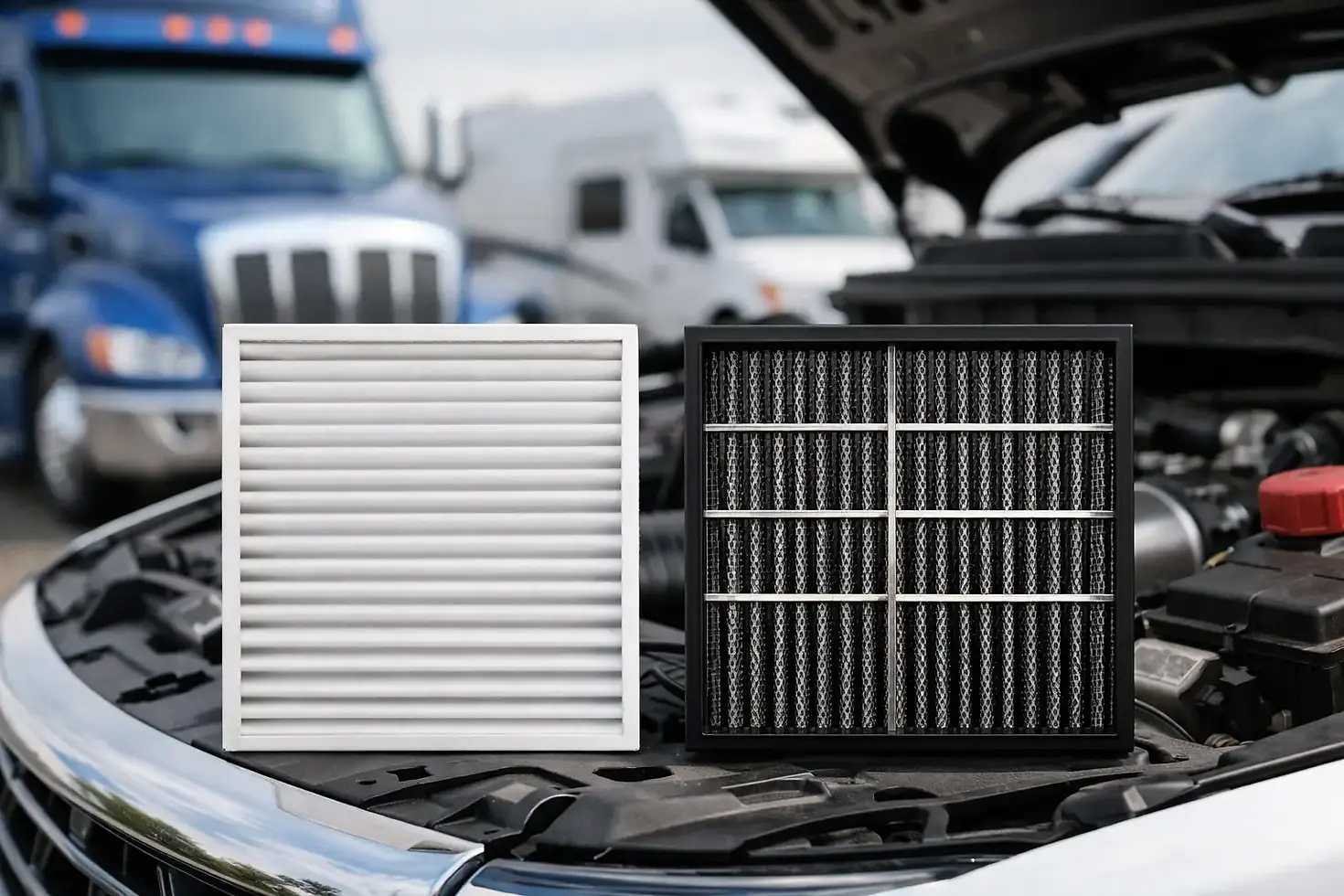
Pleated Filter vs Washable Filter for Vehicles

A blocked cab air filter can turn a working truck HVAC system into a service call. The blower may be operating normally, refrigerant charge may be correct, and yet airflow at the vents can still be weak. When comparing a pleated filter vs washable filter, the right answer depends on the equipment’s filter design, the operating environment, and whether preserving filtration performance or simplifying routine service is the priority.
For fleets, repair shops, RV service centers, and owner-operators, this is not just a consumables decision. The wrong filter style, incorrect dimensions, or poorly maintained reusable media can restrict airflow, allow debris into the HVAC case, or create repeat maintenance issues. Start with the application, then choose the filter media that the system can support.
Pleated Filter vs Washable Filter: The Core Difference
A pleated filter uses folded filter media to create more surface area within a compact frame. Most are disposable and designed to be replaced at a scheduled interval or when inspection shows loading, damage, or reduced airflow. The media can capture smaller airborne particles than a basic screen-style filter, depending on the filter’s construction and rated performance.
A washable filter is built for repeated cleaning and reuse. In mobile HVAC applications, it may use synthetic mesh, foam, screen material, or another cleanable media. Its performance depends heavily on the material, the cleaning method, and whether it is fully dry and correctly reinstalled before the system returns to service.
Neither type is automatically better. A pleated filter may provide more particle-holding capacity in a dusty operating environment, while a washable filter may be practical where the OEM system was designed around easy, frequent cleaning. The key point is that a reusable filter is not a universal substitute for a disposable pleated filter, and vice versa.
Why Filter Choice Matters in Mobile HVAC
Commercial vehicles work in conditions that passenger vehicles often avoid: gravel yards, construction sites, farm roads, loading docks, roadside idling, high-pollen routes, and long hours in urban traffic. Airborne dust, soot, leaves, insects, and moisture can load an intake filter quickly.
As restriction rises, blower output at the vents can fall. Drivers may report poor cooling or heating performance even though the compressor, heater core, evaporator, and blower motor are functional. On a fleet vehicle, that can lead to unnecessary diagnostic time if filter inspection is skipped.
Filters also help keep debris out of the HVAC housing and evaporator area. A clogged or contaminated evaporator can affect air movement and contribute to odors. A properly fitting filter does not eliminate every maintenance issue, but it supports cleaner airflow paths and more predictable service intervals.
For rooftop units, auxiliary air conditioners, bus HVAC systems, and specialty-vehicle installations, filter access can be especially important. A filter that looks acceptable on paper but is difficult to inspect or service may not be the practical choice for the vehicle’s maintenance program.
When a Pleated Filter Is Usually the Better Fit
Pleated filters are commonly preferred where the equipment manufacturer specifies a disposable cabin or return-air filter. Their larger media area can give them useful dust-holding capacity without requiring an oversized filter housing.
They are often a strong fit for vehicles operating on dusty routes, in high-traffic urban areas, or during seasonal pollen peaks. In these conditions, a disposable filter gives technicians a straightforward inspection decision: replace it when it is visibly loaded, damaged, damp, or causing unacceptable airflow restriction.
A pleated design can also be the safer option when consistent filtration is more important than frequent cleaning discipline. A fleet may have scheduled preventive maintenance, but cleaning procedures can vary by technician, location, and available equipment. Replacing a specified filter with a verified equivalent helps standardize the work.
That said, more filtration is not always better for every system. Denser media can create additional resistance if the filter was not designed for the HVAC unit. Do not select a higher-efficiency filter simply because it sounds superior. Confirm the required dimensions, airflow direction, frame type, and equipment specification before installation.
Practical advantages of pleated media
Pleated filters are generally convenient for service teams because they are removed and replaced rather than washed, dried, and inspected for reuse. They also provide a visible service record when maintenance staff retain or document the replaced filter.
The trade-off is ongoing replacement inventory. Fleets with multiple vehicle makes, models, and HVAC configurations should organize filters by verified part number and application rather than relying on visual similarity. Two filters may have nearly identical outside dimensions but use different sealing edges, depths, locating tabs, or airflow orientations.
When a Washable Filter Makes Sense
Washable filters are appropriate when the vehicle or HVAC equipment manufacturer specifically uses a reusable filter design. They can be useful in applications where technicians can access the filter easily and clean it on a consistent schedule.
For example, some specialty vehicles, off-road equipment, mobile work units, and certain RV or auxiliary HVAC systems may use cleanable intake screens or foam-style media. These systems may be intended for routine removal and cleaning as part of normal operator or technician maintenance.
The benefit is serviceability. If the correct washable filter is installed and maintained according to the equipment instructions, the user can restore it to service without keeping disposable replacements on hand for every cleaning event.
The limitation is that washable media requires proper care. Dirt trapped deep in the media, physical damage, degraded foam, distorted frames, or incomplete drying can all reduce performance. Washing does not automatically return a filter to its original condition. If the material is deteriorated or no longer seals correctly, replacement is the appropriate repair.
Cleaning is not a shortcut
A reusable filter should only be cleaned using the method approved for that filter and equipment. Aggressive brushing, harsh chemicals, compressed air at close range, or reinstalling damp media can damage the filter or introduce problems into the HVAC system.
Technicians should inspect the frame, seals, media, and retaining features each time the filter is removed. If the filter no longer sits flat in its track or cover, unfiltered air may bypass the media. That defeats much of the purpose of the filter, regardless of how clean it appears.
Airflow, Filtration, and Service Intervals
Airflow and filtration always involve a balance. A filter needs enough media performance to capture the debris the application encounters, while allowing the blower and HVAC system to move the required air volume. Restriction increases as any filter loads with dirt.
This is why a clean filter can still be wrong for the system. A high-resistance replacement may reduce airflow from the day it is installed. Conversely, a coarse washable screen may flow freely but provide less particle capture than the original pleated filter design.
Service intervals should reflect operating conditions rather than calendar dates alone. A highway truck operating primarily on paved routes may load a filter differently than a utility vehicle entering construction sites every day. Inspect filters more frequently during heavy dust, wildfire smoke exposure, high-pollen periods, or extended idling in congested areas.
Watch for practical symptoms: lower vent airflow, blower noise that seems louder than normal, uneven heating or cooling delivery, visible debris at the intake, or a filter that is discolored and loaded. These symptoms do not prove the filter is the only fault, but they make inspection a sensible first step.
Fitment Checks Before Ordering a Replacement
Filter fitment is more than length and width. Before ordering, verify the equipment model, OEM or existing part number, filter dimensions, thickness, frame construction, airflow arrow, and the location where the filter is installed. A cab air filter, a rooftop HVAC return filter, and a condenser intake screen serve different purposes and should not be treated as interchangeable.
Also confirm whether the original filter is actually designed to be washable. Some disposable filters may look like fabric or mesh but are not intended for cleaning. Attempting to wash them can break down the media or alter the fit.
For commercial fleets, record the filter part number in the vehicle maintenance file and keep the application information with stocked replacements. This reduces errors when different truck, bus, van, trailer, or specialty-vehicle platforms share a maintenance facility.
KABAIR can help customers identify mobile HVAC/R replacement filters and related components using available OEM numbers, equipment models, dimensions, and application details. Exact compatibility should always be confirmed before purchase or installation.
Choose the Filter the System Was Designed to Use
The most reliable decision is usually the least complicated one: use the filter type specified for the HVAC equipment, then maintain it based on actual operating conditions. Select a pleated filter when the system calls for replaceable media and dependable particle-holding capacity. Use a washable filter when the equipment is designed for reusable media and your maintenance process supports proper cleaning and inspection.
A clean, correctly fitted filter is a small component with a direct effect on airflow, comfort, and service time. When a vehicle comes in with weak vent output, check the filter before assuming the repair requires major HVAC work.


Comments