

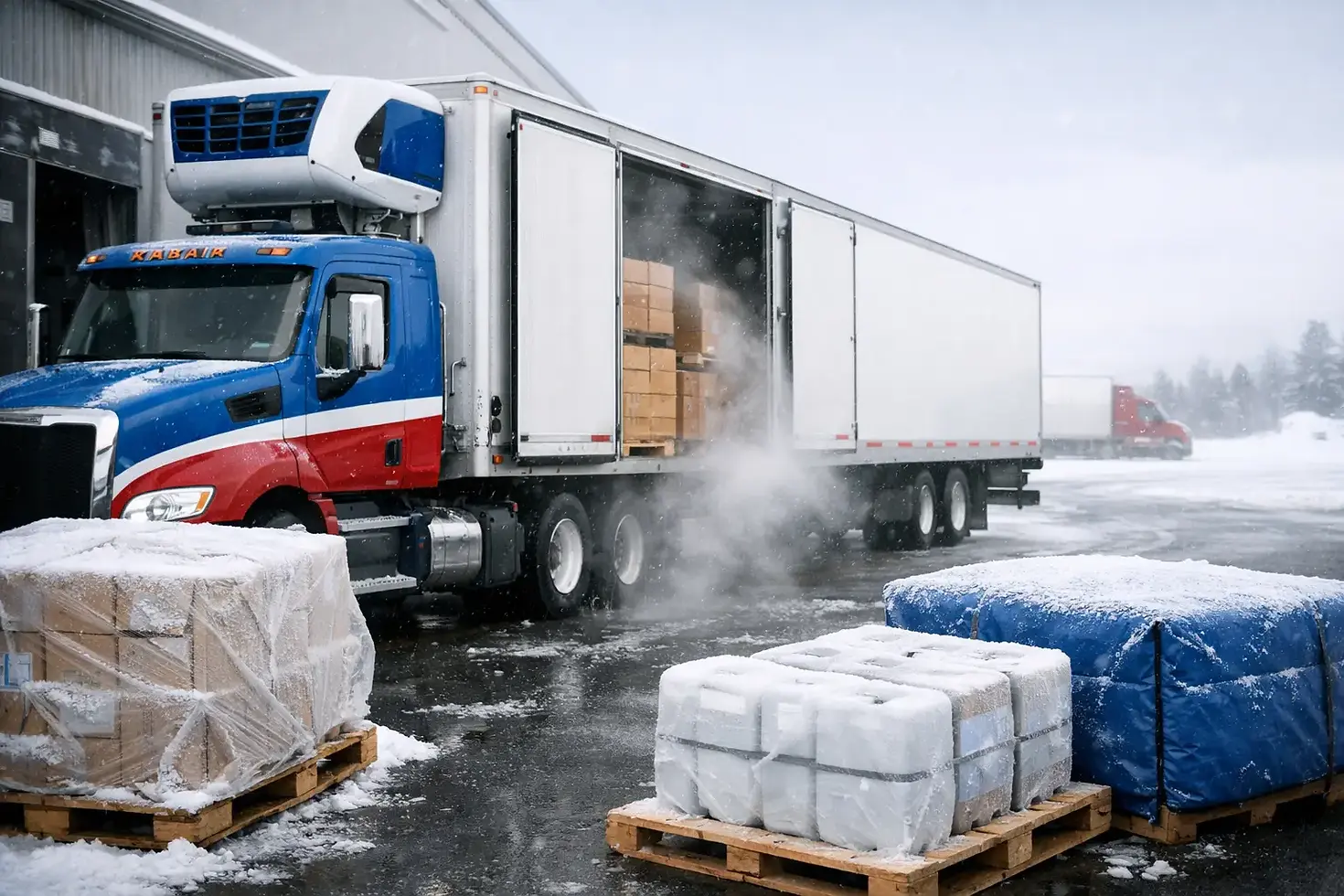
How to Prevent Cargo Freezing in Transit

A delivery can leave the yard at the correct temperature and still arrive with frozen product after several hours of winter exposure. Knowing how to prevent cargo freezing starts with treating the cargo area as a controlled thermal space, not simply a vehicle body with a heater installed. Equipment capacity, insulation, airflow, loading practices, and driver procedures all affect the result.
For fleet managers, upfitters, and service teams, the goal is not just to keep the compartment warm. It is to maintain the required product temperature through loading, transit, stops, door openings, and overnight parking - including during the coldest conditions the vehicle is expected to operate in.
Start With the Cargo Temperature Requirement
The first question is not which heater to buy. It is what temperature the cargo must maintain. Some products can tolerate short exposure near freezing, while liquids, chemicals, produce, medical supplies, paint, adhesives, and water-based materials may require a much higher minimum temperature. The acceptable range should come from the product manufacturer, shipper, or governing handling specification.
Build the system around the lowest expected ambient temperature, the route duration, the number of door cycles, and the cargo volume. A lightly loaded walk-in body has more air to heat but may lose heat quickly every time doors open. A densely packed load has more thermal mass, which can help stabilize temperature, but cold-soaked pallets can also pull heat from the compartment for hours.
Set a practical control target above the cargo's freeze point. If a product freezes at 32 degrees Fahrenheit, operating the compartment at 33 degrees leaves almost no margin for sensor variation, cold spots, or door openings. The right buffer depends on product sensitivity and the temperature uniformity the vehicle can realistically maintain.
Select a Heating System for Real Heat Loss
Cargo heaters must offset heat loss through the roof, walls, floor, doors, gaps, and ventilation openings. They must also recover temperature after loading and delivery stops. A heater that appears adequate while parked may be undersized once the vehicle is moving through subfreezing air or making frequent deliveries.
System selection should account for compartment dimensions, insulation type and thickness, door construction, route conditions, and available power or fuel source. Larger cargo spaces, thin-wall bodies, frequent-stop routes, and extreme northern climates generally require more heating capacity and better air distribution than a lightly used local service van.
Fuel-fired air heaters can provide high-output, independent heating for many vehicle applications. Electric systems may be appropriate where shore power, battery capacity, or hybrid vehicle architecture supports the load. Engine-driven solutions can be effective during operation, but they may not protect cargo during extended parking if the engine is shut down. The best approach depends on the duty cycle, vehicle platform, and whether cargo protection is needed without idling.
Do not size equipment based only on nominal BTU output. Confirm the heater's usable output in the installed application, including duct length, altitude considerations, electrical demand, fuel supply requirements, and control strategy. A properly sized system with poor duct routing can still leave cargo near the doors or floor vulnerable to freezing.
Avoid relying on cab heat
Cabin HVAC is designed around passenger comfort, not cargo protection. It may not deliver enough heat to a separate cargo compartment, and it rarely provides consistent temperature control in a partitioned vehicle. If cargo needs freeze protection, use equipment designed to condition the cargo space directly.
Insulate the Compartment Before Adding More Heat
Heating equipment cannot efficiently compensate for an uninsulated or poorly sealed cargo body. Insulation reduces the heater run time, improves temperature recovery, and helps keep the compartment stable during short shutdowns. It also reduces the risk that cargo positioned near an exterior wall will freeze while the center of the load remains warm.
Inspect the roof, sidewalls, doors, floor, wheel wells, and bulkhead. The floor deserves particular attention because it is exposed to cold road air and can create a low-temperature zone beneath pallets, totes, and cartons. Insulated floor panels, raised pallet systems, and thermal barriers may be needed for freeze-sensitive freight.
Door seals, latches, hinges, pass-through openings, and cable penetrations should be checked for air leaks. Small gaps create concentrated cold spots and force the heater to work harder. Strip curtains or insulated door curtains can reduce heat loss on multi-stop routes, although they must be selected and installed so they do not interfere with loading or damage easily in daily use.
Manage Airflow, Not Just Air Temperature
A temperature sensor reading at the heater return does not prove the entire load is protected. Warm air naturally rises, while cold air settles near the floor, doors, and exterior walls. Cargo packed tightly against vents, walls, or doors can block airflow and create pockets that fall below the control setpoint.
Use supply and return locations that move conditioned air across the full cargo space. Ducted heat outlets may need to target the rear of a long body or the lower portion of the compartment, depending on the application. Return air should be able to circulate back to the heater without being blocked by pallets or shelving.
Loading methods matter. Leave reasonable air channels around cargo where product specifications permit, and avoid stacking freeze-sensitive cartons directly on a cold floor. Use pallets, dunnage, insulated blankets, or appropriate containers to separate products from exterior surfaces. These measures do not replace heating, but they can protect the load during the periods when the system is recovering from a door opening.
Use Temperature Monitoring That Matches the Risk
For low-value, low-risk cargo on short routes, a visible compartment thermometer and driver checks may be sufficient. For regulated, high-value, or freeze-sensitive products, continuous monitoring and data logging provide much better control. The system should measure actual cargo-area conditions, not only heater discharge temperature.
Place sensors where freezing is most likely to occur: near rear doors, low in the compartment, adjacent to exterior walls, and within or near the product load when feasible. A single sensor mounted high on an interior wall can report a safe temperature while the lower rear corner of the vehicle is below freezing.
Set alarms with enough margin for the team to respond before product is damaged. An alarm at the exact freeze point is often too late. Drivers and dispatch personnel should know who receives alerts, how they verify the condition, and what corrective action is authorized, such as increasing the setpoint, reducing door-open time, moving cargo, or routing to a protected location.
Build Cold-Weather Procedures Into Daily Operations
The most capable heating system can be defeated by inconsistent operating practices. Precondition the cargo area before loading when temperatures are low. Loading warm cargo into a cold-soaked compartment creates a long recovery period, while loading into a conditioned space reduces the initial thermal shock.
Keep doors closed whenever loading activity allows. At delivery stops, organize paperwork, verify the recipient, and stage the unload sequence before opening the cargo doors. Repeated open-door delays can remove a significant amount of heat, particularly in box trucks and larger vans.
Drivers should confirm heater operation, fuel level or battery status, setpoint, and temperature display during the pre-trip inspection. They also need clear instructions for overnight parking. If the vehicle must sit outdoors, determine whether the heater can operate independently for the required duration, whether shore power is available, and whether the fuel or electrical reserve is sufficient.
Maintain the System Before Winter Exposes a Weak Point
Cold-weather failures are often maintenance failures that were not visible in mild conditions. Inspect heaters before the winter season and at scheduled intervals. Check fuel lines, electrical connections, fuses, ducting, combustion-air components where applicable, control panels, temperature sensors, and mounting hardware.
Airflow restrictions can reduce heater performance without triggering an obvious fault. Inspect ducts for damage, crushed sections, disconnected joints, and blocked outlets. Confirm that intake and exhaust components are correctly routed and protected from road debris, snow, and ice. For electric systems, test battery condition, charging performance, cable integrity, and the actual load capacity of the installed power system.
Document temperature complaints and investigate patterns. If cargo freezes only near the rear doors, the problem may be air distribution or seals rather than heater output. If temperatures fall during overnight stops, the issue may be runtime capacity, fuel supply, electrical reserve, or an operating procedure that shuts down the system too soon.
Plan for the Conditions That Create Exceptions
The route that looks acceptable on an average winter day may fail during a polar-weather event, a long loading delay, or an unexpected breakdown. Establish a threshold for when normal equipment and procedures are no longer adequate. That may mean adding insulation, using supplemental thermal protection, reducing route duration, arranging indoor staging, or postponing a load that cannot tolerate exposure.
A fit-for-purpose cargo heating system, correctly installed and supported by disciplined loading and monitoring practices, protects more than the product. It reduces claims, rejected deliveries, emergency rework, and preventable downtime. When a vehicle's cargo requirement is clearly defined, KABAIR can help align mobile heating and thermal-management components with the vehicle application and operating conditions.


Comments