

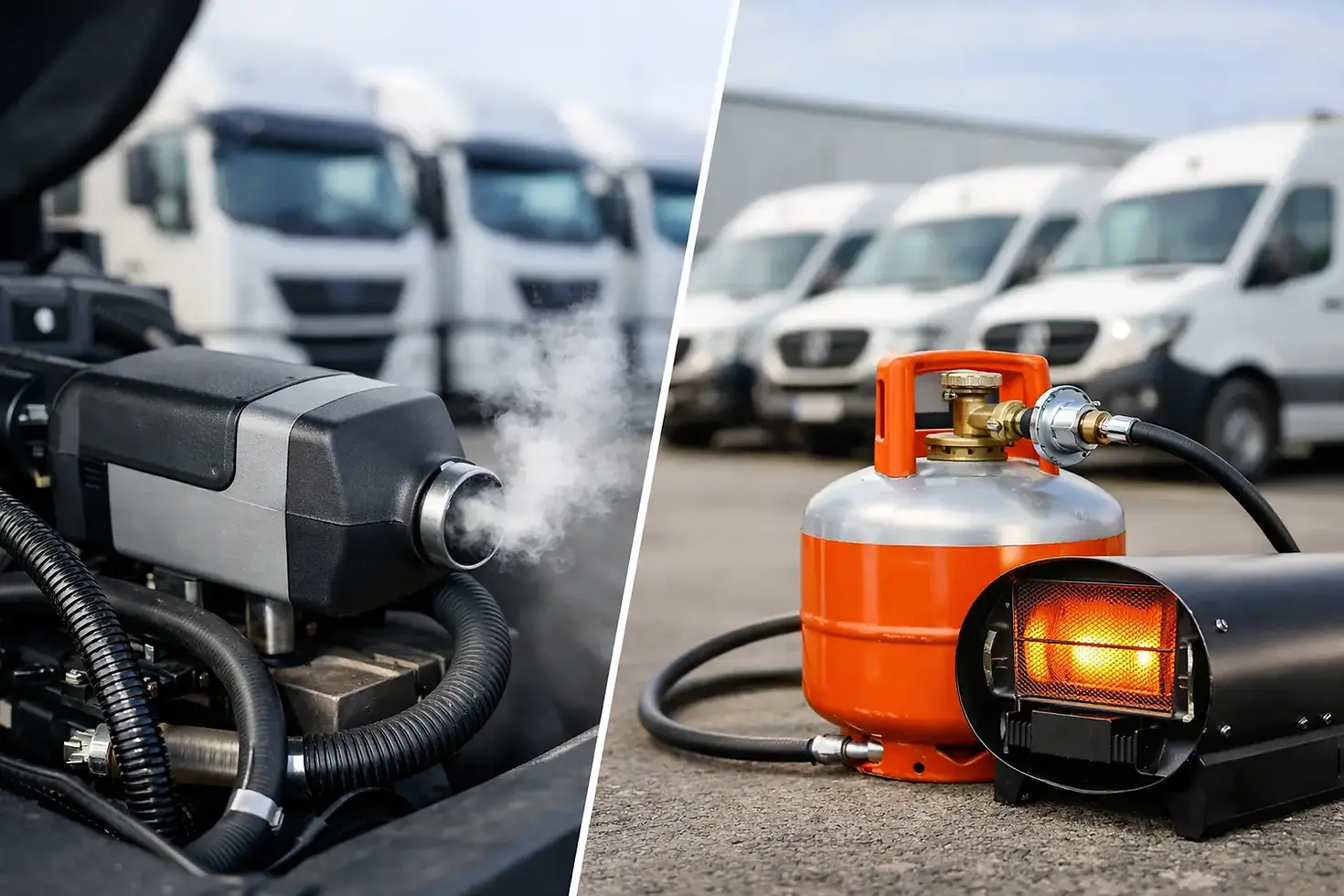
Diesel Parking Heater Versus Propane for Fleets

A driver sleeping in a service truck at 10°F needs heat that will run through the night without idling the engine, draining the starting battery, or creating an avoidable fuel stop. That is the practical question behind diesel parking heater versus propane selection. Both systems can heat a van, truck cab, enclosed trailer, or specialty vehicle effectively, but their operating demands are different.
For commercial applications, the right choice usually comes down to the vehicle’s existing fuel architecture, duty cycle, available installation space, and maintenance capability. A heater that is efficient on paper can still be the wrong fit if it adds fuel-handling complexity, reduces usable cargo space, or is difficult to service in the field.
Diesel Parking Heater Versus Propane: The Core Difference
A diesel parking heater burns diesel fuel to heat air or coolant while using relatively little electrical power for its control system, fan, and fuel pump. In air-heating applications, the unit draws cabin air across a heat exchanger and returns warm, dry air to the occupied space. Combustion air and exhaust remain outside the cabin when the system is installed correctly.
A propane heater uses fuel stored in a dedicated LP cylinder or onboard tank. Depending on the equipment type, it may be vented, direct-vent, or use a sealed combustion design. For vehicles, a properly vented system is generally the appropriate choice because it keeps combustion byproducts outside the occupied area.
The distinction matters because diesel is already available on many commercial trucks, while propane normally requires a separate tank, regulator, fill arrangement, and fuel-management process. Conversely, propane may be a logical choice for a conversion or work vehicle that already uses LP gas for cooking, water heating, or other auxiliary equipment.
Fuel Supply and Operating Range
For a diesel-powered vehicle, a diesel heater can simplify the fuel plan. It commonly draws from the vehicle’s main fuel tank through a dedicated pickup arrangement or from an auxiliary tank. Many installations are configured so the heater cannot consume the final portion of the vehicle’s diesel supply, preserving fuel for starting and travel.
This is particularly useful for fleet vehicles that return to a diesel fueling location. The operator does not need to inspect, exchange, or refill a separate propane cylinder before every overnight job. Fuel availability is also favorable for long-haul trucks, utility vehicles, mobile workshops, and diesel-equipped vans operating in remote areas.
Propane has advantages where it is already part of the vehicle build. A properly sized LP tank can provide substantial heat runtime, and propane does not face the same fuel-gelling concerns as untreated diesel in severe cold. However, refilling access and tank exchange logistics should be evaluated by route. A crew working far from LP suppliers may find a separate propane supply less convenient than drawing from the vehicle’s existing tank.
Fuel consumption should be compared by actual heat output, not by tank size alone. Heater output is commonly rated in BTU per hour or kilowatts, and run time changes significantly with insulation, outdoor temperature, interior volume, door openings, and thermostat setting. A lightly insulated cargo van with frequent loading activity has a much different heating load than a well-insulated sleeper compartment.
Cold-Weather Performance and Heat Delivery
Both fuel types can produce reliable heat in winter, provided the system is correctly sized and installed. Diesel air heaters are widely used for cab and sleeper heating because they deliver warm air quickly and operate independently of the engine. They also reduce the need for extended engine idling, which can lower fuel use and avoid unnecessary engine hours.
Diesel fuel quality becomes more relevant in very low temperatures. Winterized diesel, anti-gel practices where appropriate, clean fuel pickups, and protected fuel routing help prevent cold-weather operating issues. A heater’s startup cycle is often its highest electrical-demand period, so battery condition and wiring size also matter when temperatures fall.
Propane vaporization can slow as temperatures drop, especially with smaller cylinders, high fuel demand, or low tank levels. The fuel may still be present in the tank, but the rate at which it converts to usable vapor can limit heater performance. Tank capacity, mounting location, and expected ambient conditions should be addressed during system design rather than after the first cold-weather service call.
Heat distribution is another practical consideration. Duct routing, outlet placement, and return-air location affect comfort as much as heater capacity. In a van conversion, one outlet near the sleeping area may be appropriate. In a mobile service body, multiple outlets or a carefully routed duct system may be needed to avoid a warm front compartment and cold rear work area.
Installation Requirements and Space Planning
A diesel parking heater typically requires mounting space for the heater body, combustion-air intake, exhaust, fuel line, pump, wiring harness, controller, and warm-air ducting. Exhaust routing must be protected from road debris, heat-sensitive components, doors, and areas where fumes could enter the vehicle. The installation must also account for service access to the heater, fuel connection, and electrical components.
Propane systems require equally careful planning, but the supporting hardware is different. The installation may include a DOT-approved cylinder or permanently mounted tank, mounting brackets, shutoff valve, regulator, gas lines, venting provisions, and appliance-specific connections. Tank placement is a significant design factor because it affects payload, usable space, ground clearance, and access for refilling or inspection.
For upfitters, the vehicle platform can guide the decision. A diesel heater often fits naturally into a diesel cargo van, box truck, or medium-duty work truck where an auxiliary fuel pickup and underbody exhaust routing are feasible. Propane may be more practical in specialty builds with a preplanned LP compartment and multiple propane appliances.
Neither system should be treated as a universal add-on. Heater placement, airflow, exhaust separation, fuel-line protection, fuse sizing, and controller location need to be matched to the vehicle application. Fitment accuracy is especially important when installing around factory fuel tanks, emissions components, batteries, lift equipment, shelving, or refrigerated cargo equipment.
Safety, Compliance, and Maintenance
The safety question is not whether diesel or propane is inherently safe. Both can be safe in a vehicle when the equipment is rated for the application, installed to applicable requirements, and maintained correctly. Both can create serious risks when combustion exhaust, fuel supply, ventilation, or electrical protection is handled poorly.
A diesel heater requires periodic attention to its combustion chamber, glow component, fuel pump operation, intake and exhaust condition, and carbon buildup. Short cycling, repeated failed starts, contaminated fuel, and incorrect altitude settings can affect performance. Running the heater through a complete operating cycle at regular intervals can help identify problems before cold weather arrives.
Propane systems require inspection of tank condition, mounting hardware, lines, fittings, regulator operation, and leak integrity. Cylinders and tanks have their own inspection and replacement considerations. Any smell of propane, damaged hose, corroded fitting, or unexplained heater shutdown should be treated as a service issue, not a field workaround.
Carbon monoxide detection is a sensible layer of protection in any occupied vehicle compartment with a combustion heater. It does not replace correct installation or regular inspection, but it provides warning if exhaust gases enter the space.
Which Heater Fits Your Vehicle Operation?
A diesel parking heater is usually the more efficient operational choice for diesel fleets, sleeper applications, remote-service trucks, and work vans that need overnight or extended heat without engine idling. It uses a familiar fuel supply, avoids handling a separate cylinder, and aligns well with existing diesel fueling routines.
Propane is often the better fit when the vehicle already has an LP system, when the build includes several propane appliances, or when the owner prefers fuel separation from the vehicle’s drive fuel. It can also make sense for gasoline-powered vehicles where adding a diesel fuel source would create more complexity than a dedicated propane installation.
The best decision is application-specific. Start with the vehicle’s fuel type, daily operating range, overnight heating hours, cargo layout, expected low temperature, and service plan. KABAIR can help commercial buyers narrow heater options around vehicle fitment and the supporting components needed for a dependable installation.
A heater should support the workday, not add another preventable maintenance task. Select the fuel system your operators can supply, your installers can route safely, and your service team can maintain with confidence.


Comments